A few weeks ago someone told me my work was different, there was something off. For the next few weeks I doubled my use of AI to get better, reviewing and rereviewing every paragraph, down to the letter. It did not work.
Working with AI makes you feel that you can do anything alone, so you stop asking for help you still need. That was my problem.
What I had stopped doing
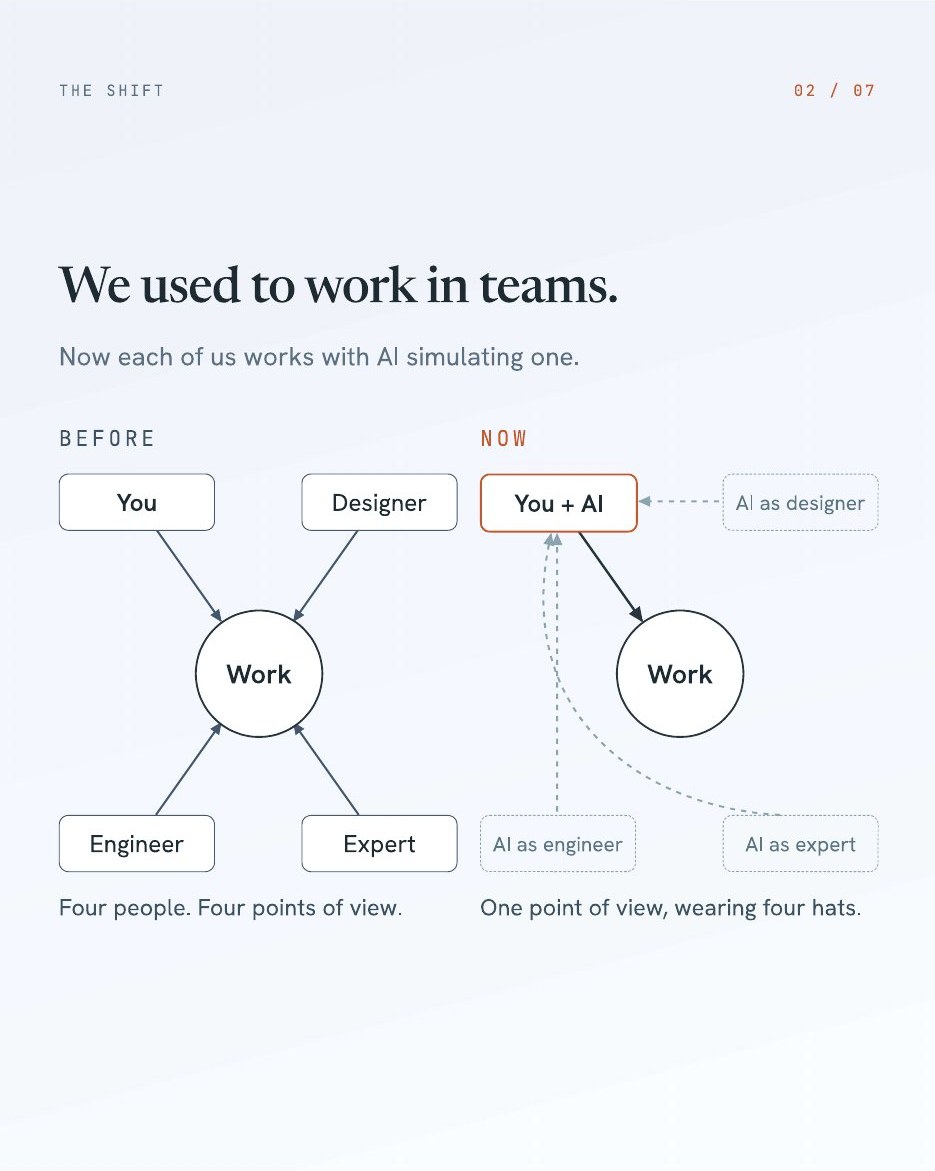
I stepped back and looked at how I work now versus how I used to work. I had stopped sending drafts to engineers and designers before they went out. Not deliberately. I was using AI to play those roles, asking it to review the draft the way each of them would. It gave me a critique every time. What it could not give me was another person. Every opinion in that chat was still mine, including the one deciding which parts of the critique to take seriously.
What I did instead
I went back to my peers, and instead of using AI to do the work, I used it to consolidate what they said, to summarize it, to work out what they actually meant instead of what I assumed they meant. What came back was not what I would have told myself. Then I used AI to sharpen what I was writing, not to write it. My work got much better.
Less collaborative, not more
In an interview I did for Wharton Business School about the impact of AI at work, they asked me whether AI has made us more collaborative or less. My honest answer is less.
We used to bring in the designer, the developer, whoever knew the part of the job we didn't, because we could not do it ourselves. Now we believe we can produce all of it. So we stopped asking. The belief that we can do everything alone is making our work worse.
What we lost is a different point of view. The person who looks at the work and says it is wrong, or points to where it still needs to get better. You can generate a brand strategy in minutes. You cannot grade one.
Stack the judgments
This is not an argument for not using AI.
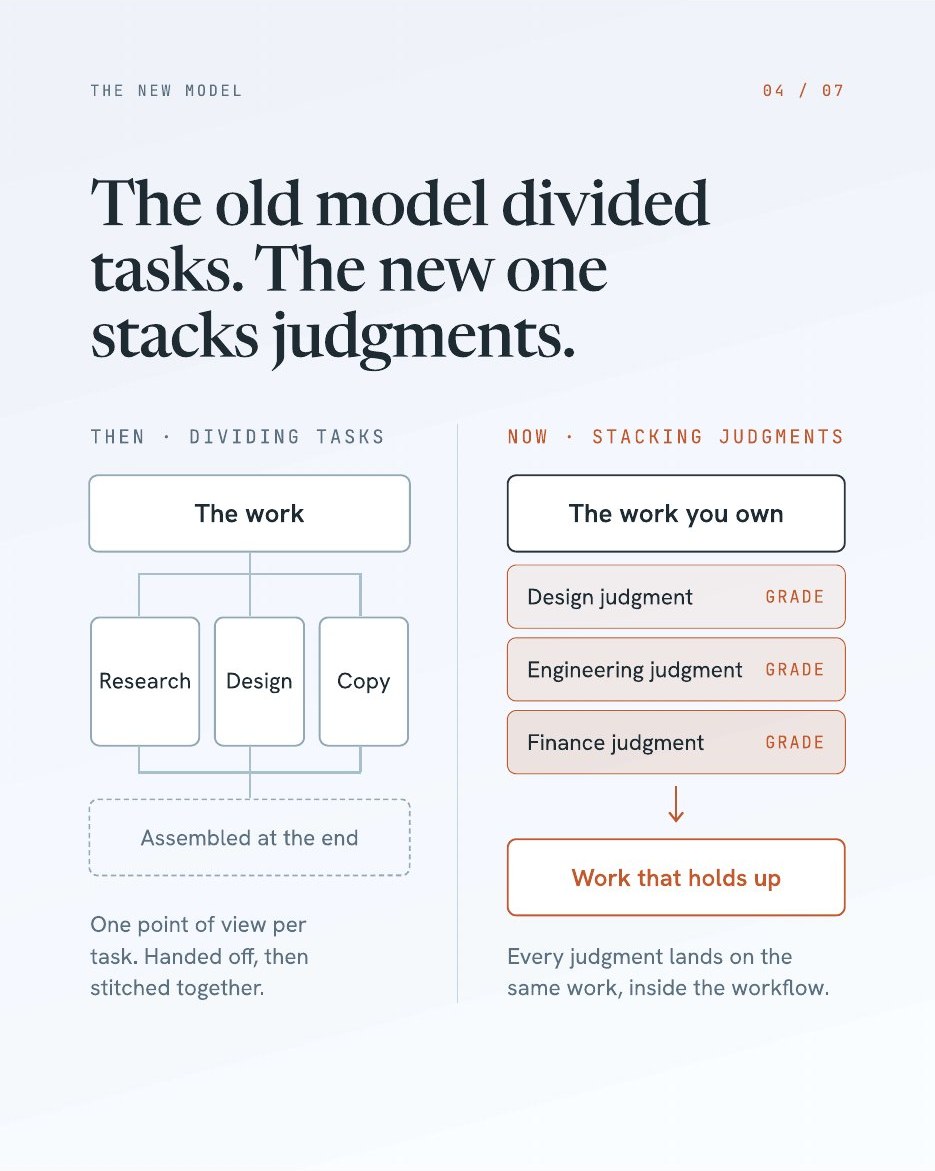
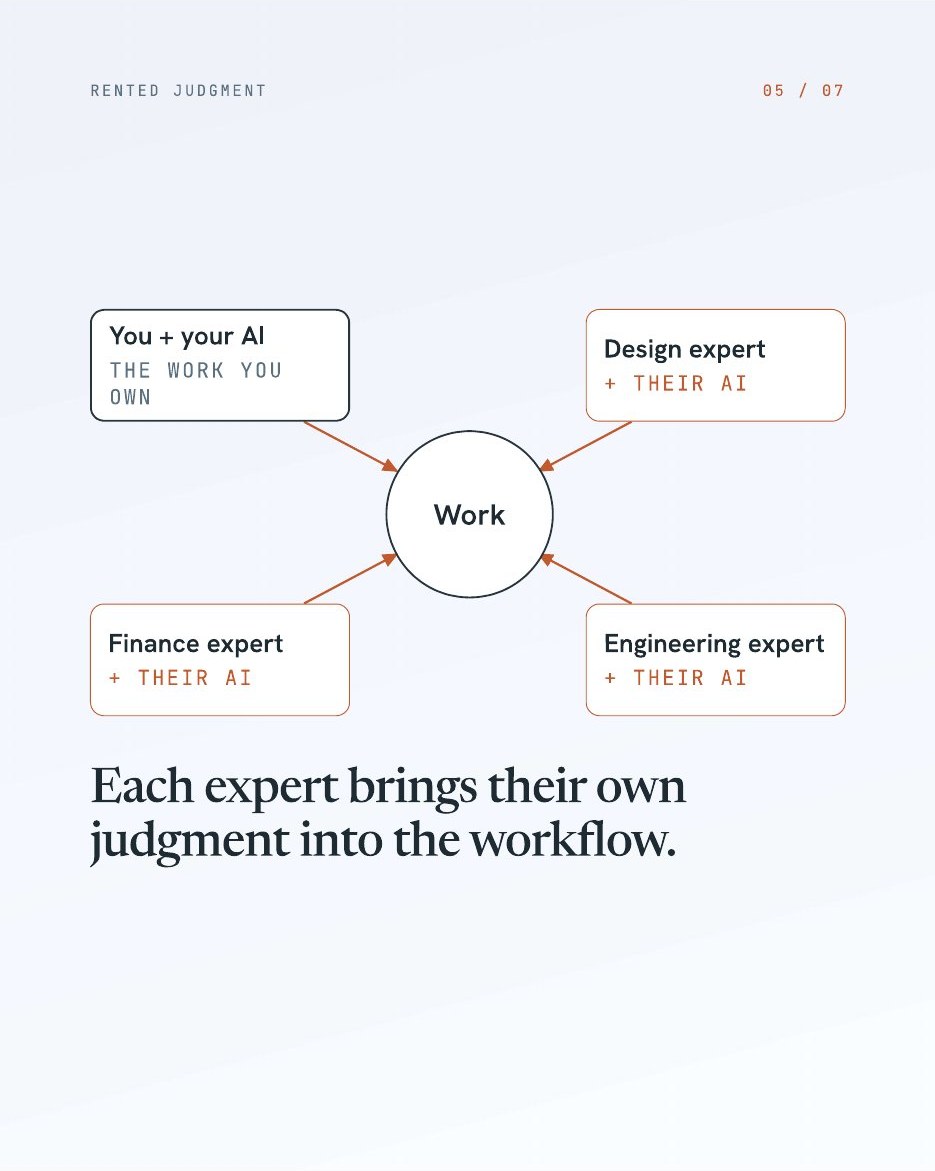
The old model of collaboration was dividing tasks: you do research, you do design, you do copy. The new model is stacking judgments.
The collaboration has to happen inside the AI workflow now, in the chat where the draft gets made, not in a separate review before it goes out. When you produce something you could not have produced two years ago, you need judgment you do not have. So rent it.
Incorporate the judgment from experts as inputs, then use them to grade the output. The speed is not the hard part. Keeping other people's judgment inside the work is.
Which part of the work you now produce alone could you not grade?